
The company expects net proceeds of Rs 53,036.13 crore from the rights issue that opens on May 20 and closes on June 3.
RIL's debt stood at Rs 3.06 trillion as of December 2019, against Rs 2.87 trillion in March 2019.

In March this year, Worldline India launched Vabox (Voice Alert Box): merchants will now get instant audio alerts on the settlement of UPI (Unified Payments Interface) payments via QR codes in languages of their choice when customers check out. "They needn't worry whether the amount has been credited to their account," says Gulshan Pruthi, the firm's executive vice-president. The French payments giant will roll out 500,000 Vaboxes in the initial phase.

Reliance Industries invested Rs 30,000 crore (around $3.76 billion) in its retail business and added 2,500 stores, taking the total store count to 15,196 in FY22. Besides, Reliance Retail added 11.1 million square feet of warehousing space during the year, nearly doubling the warehousing space to 22.7 million square feet, Reliance Industries Ltd (RIL) said in the annual report for FY22. In FY22, Reliance Retail added over 1.50 lakh jobs, taking its total headcount to 3.61 lakh.

It also said that to make it easier for people to subscribe, Disney+ Hotstar VIP has tied up with telecom players Jio and Airtel.

A single application and a plethora of services for passenger cars - that is what myTVS, a brand that operates under Ki Mobility Solutions and is part of the TVS family, is set to bring to customers, in a bid to disrupt the concept of "super apps" in India. Starting July 15, myTVS will launch its connected car platform or super app called myTVS Life360 for aftermarket passenger cars. Through it, customers will be able to avail themselves of a range of services like maintenance, diagnostics, roadside assistance, accessories, payments, insurance, and so on.

Mutliplexes want the gap between a film's release in theatres and on OTT to be doubled from 4 to 8 weeks.
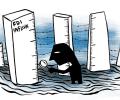
Foreign Direct Investment into India rose by 13 per cent in 2020, boosted by interest in the digital sector, and while fund flows "declined most strongly" in major economies such as the UK, the US and Russia due to the Covid-19 pandemic, India and China "bucked the trend", the UN has said.
RIL is setting up infrastructure for a full-fledged horizontal e-commerce offering - internally called the New Commerce - to simultaneously launch pan-India by October-November.

The Tata group on Thursday launched its super app, Tata Neu, bringing all its brands in one platform as it seeks to play a major role in the Indian ecommerce space currently dominated by the likes of Amazon and Flipkart.

The fixed line broadband will offer "ultra high-definition entertainment on large screen TVs, multi-party video conferencing from your living room, voice-activated virtual assistants, virtual reality gaming, digital shopping, immersive experiences," Ambani said.

Mumbai Indians, who are placed sixth in the points table, have been able to bounce back impressively with wins against Delhi Capitals, Kolkata Knight Riders and Sunrisers Hyderabad.
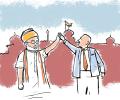
The footprints of Indian-origin corporate executives at multinationals is expanding, with Sandeep Kataria taking over the reins of footwear major Bata as its global chief executive officer. From FMCG majors to IT titans, Kataria joins the league of Indian-origin executives who have climbed the highest echelons of corporate across diverse sectors globally. From Nooyi to Pichai to Nadella, the list of such people at the helm of multi-billion dollar enterprises is long.

Reliance Retail has bought a 25.8 per cent stake in Dunzo, India's leading quick commerce player, for $200 million (around Rs 1,488 crore) as it looks to expand its presence in online grocery delivery business. Dunzo has raised $240 million (about Rs 1,787 crore) in its latest funding round that was led by Reliance Retail Ventures Ltd (RRVL) - the retail arm of Reliance Industries, the two firms said in a statement. Existing investors Lightbox, Lightrock, 3L Capital and Alteria Capital also participated in the funding round.

In the rights issue, the company is offering one share for every 15 shares held at Rs 1,257. The rights shares are expected to be listed on the BSE and NSE on or around June 12.

Telecom industry body COAI has approached the information technology ministry for removal of fake and misleading messages from social media platforms like Facebook, Whatsapp and Twitter linking spread of COVID-19 to 5G technology. The Cellular Operators Association of India (COAI), whose members include Reliance Jio, Bharti Airtel and Vodafone Idea, said the claims linking 5G with coronavirus are baseless as 5G networks have not yet been installed in the country and even 5G trials are yet to be started by the telecom operators. In a letter dated May 15 to MeitY additional secretary Rajendra Kumar, COAI director general S P Kochhar said: "To safeguard the national interest, we request your good office to kindly instruct all the social media platforms such as Facebook, Watsapp, Twitter, etc, to remove all such posts and misleading campaigns from their platforms on an urgent basis." People have been sharing audio and video messages on social media platforms in which 5G towers are being blamed for rise in casualties across the country even though none of the companies have installed 5G technology anywhere in India.

As India gets ready to roll out one of the largest vaccine programmes, billionaire Mukesh Ambani on Tuesday said his group is working with authorities to provide technology tools and backbone for mass inoculation against COVID-19. Ambani's telecom venture Jio was rolled out four years back, offering free voice calling and dirt-cheap data. Today, Jio is India's largest telecom operator with over 400 million users, each connected to the internet. At a Facebook event, Ambani said the government's digital push kept the country running even during the pandemic and is now helping in the rollout of one of the largest vaccination programmes.
Billionaire Mukesh Ambani on Wednesday pitched for using the USO Fund to subsidise smartphones for select groups to help penetrate the digital revolution and said India should make the rollout of 5G or the fifth-generation technology standard for broadband cellular networks a national priority. As much as 5 per cent of the licence fee paid by telecom operators goes to the Universal Service Obligation (USO) Fund, which was set up in April 2002 for achieving universal service objectives by providing access to telephone services in rural and remote areas and creation of infrastructure for mobile services and broadband in these areas. However, according to the CAG, less than half of the funds so collected are transferred for the said purpose.
Mukesh Ambani's Reliance group has struck acquisition deals worth $4.2 billion with a dozen companies in just two years to expand its retail business. The latest purchase was of a majority stake in Justdial for Rs 3,497 crore. Elaborating on his acquisition strategy a few weeks ago during the AGM, Ambani stated that one of the key planks would be to acquire businesses that enhanced Reliance's offerings and experiences to customers and that they would be both physical and digital.
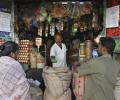
Everyday consumerables, such as grocery and order-in food items are the key buyout sector, analysts say, and a major reason for kirana stores' digitisation push.

Foreign brokerage firm CLSA initiated coverage on the stock with a Sell rating and target price of Rs 1,095, citing hefty premium valuation.

A list of watchable Hindi legal shows and films on OTT, in order of release.

Among all the geographies where Amazon is fighting regulators, India is the only place where its lines are also tangled in a major corporate battle, this one with India's largest company by market capitalisation over the acquisition of Mumbai-based Future Group's retail chain, the country's second largest. No other corporate entity in any country offers a challenge to Amazon's hegemony in a way Reliance Industries does - and the final hearing of an arbitration case filed at the Singapore International Arbitration Centre between the two may decide at least some of these issues. This legal battle between one of the world's most powerful corporations and one of India's most powerful conglomerates could be complicated by a host of other developments.

Social e-commerce platform Meesho is set to disrupt the food and grocery market by offering free home delivery on all orders in over 200 below Tier 1 cities in a year's time, in the first phase. It is also disrupting the monetization model by focusing primarily on advertising revenues rather than commissions from sellers, as distinct from its competitors. The move is expected to challenge the big players in the sector which include Jio Mart, Tata's Big Basket, Amazon, Grofers, and others, many of which have minimum prices for free delivery.

Disney-Star is positioning IPL as a "big-screen experience" where families and friends can come together over a game of cricket, much the way football is consumed in Europe and other parts of the world.

'In the next five years both online and TV viewership will grow and complement each other.'

India's total online shopper base at 30 per cent of its internet population is low when compared with 78 per cent in China and 70-plus per cent in the US.

Feedback from telecom members indicated a 10 per cent increase in traffic, but no fears of choked networks. Telcos currently use 65-70 per cent of the network capacity. In other words, they have enough additional capacity to handle the new pressure without clogging the system.

What to expect at the Fashion Design Council of India x Lakme Fashion Week
Flipkart has promoted several of its leaders into newer roles at a time when the Walmart-owned e-commerce giant has internally raised its IPO (initial public offering) valuation target to about $60 billion and aims for a US listing in 2023, according to the sources. "I am delighted to announce the promotion of some of our exemplary leaders," said Kalyan Krishnamurthy, chief executive officer, Flipkart Group, in an internal note, and which has been reviewed by Business Standard. "Each of them has been instrumental in delivering impact and creating long-term value for Flipkart.

There are several discussions going around in the e-health sector for consolidation with key players being PharmEasy, 1mg, Medlife and Netmeds. According to reports, Reliance Jio is in talks with Netmeds to acquire the latter.

India's economy could prove to be the "most resilient" in the subregion of South and South-West Asia over the long term, according to a report by the UN, which says a positive but lower economic growth post COVID-19 pandemic and the country's large market will continue to attract investments. The report titled 'Foreign Direct Investment Trends And Outlook In Asia And The Pacific 2020/2021', and compiled by United Nations Economic and Social Commission for Asia and the Pacific (UNESCAP), stated that inward FDI flows to South and South-West Asia slightly decreased by 2 per cent in 2019, from $67 billion in 2018 to $66 billion in 2019. The growth, however, was mainly driven by India, which accounted for 77 per cent of the total inflows to the subregion and received $51 billion in 2019, up 20 per cent from the previous year.
Six consecutive profitable quarters after an equal number of losses - for Bharti Airtel, the turnaround has been quick. But it is not a result of higher tariffs or absence of exceptional items alone. Execution and strategy are playing a part, too. Bharti Airtel's chief executive officer Gopal Vittal summed it up in a post-result conference call last month. "We track the profit in each of our 237,500 (cell) sites.

Three firms, Vishvapradhan Commercial Pvt Ltd along with AMG Media Networks and Adani Enterprises Ltd, have offered a price of Rs 294 for the acquisition of up to 1,67,62,530 fully paid-up equity shares of NDTV having a face value of Rs 4 from the public shareholders.

Hero ISL received, in its third edition, a total viewership of 216 million as compared to around 207 million last year. One of the highlights of the season was the sharp increase in rural India viewership registering a cumulative figure of 101 million, indicating the widespread appeal of the sport.

Saudi Aramco had right from the beginning resisted the price tag Reliance had put for the 20 per cent stake in O2C business, which comprises the company's twin refineries at Jamnagar in Gujarat, petrochemical plants and 51 per cent in fuel retailing venture.
Flipkart Group on Monday said it has raised $3.6 billion (about Rs 26,805.6 crore) in funding led by GIC, Canada Pension Plan Investment Board (CPP Investments), SoftBank Vision Fund 2 and Walmart, valuing the e-commerce giant at $37.6 billion. The company, which competes with Amazon, Reliance Industries' JioMart and others in the burgeoning Indian e-commerce market, said it will continue to make deeper investments across people, technology, supply chain and infrastructure to address the requirements of a rapidly growing consumer base in the country. The current funding round has also seen participation from sovereign funds DisruptAD, Qatar Investment Authority, Khazanah Nasional Berhad as well as marquee investors Tencent, Willoughby Capital, Antara Capital, Franklin Templeton and Tiger Global.

Categories such as lifestyle, food and electronics accounted for over 1,350 sellers across the country last year.

As the second season of The Night Manager hits the OTT screen, Deepa Gahlot looks back at the top spy thrillers on streaming platforms.

Tata Consultancy Services (TCS) is India's most-valuable brand in 2022 replacing HDFC Bank, which held the number one spot since 2014, according to Kantar BrandZ report on India's most-valuable brands. TCS was able to grab the top slot due to rising global demand for automation and digital transformation, following the pandemic. Indian brands have bounced back from the pandemic to increase their brand value by 35 per cent compound annual growth rate (CAGR) since 2020.
